

A fifth rate rise seems likely this November, 2026
Author: Peter Vassilis
Reading time: ~5 minutes
Key takeaways
Rates: a fifth rise looks likely on the 3rd of November, 2026
The construction of data centres is keeping prices high
Prices: the top end has fallen furthest
Upsizers, first-home buyers, and those patient on the investor front seem to be winners right now
The bank's test still applies
What to do now
A fifth rate rise coming in Nov 2026
The cash rate is 4.60% after four rises this year. CBA, AMP, Westpac, ANZ and NAB all expect a rise to 4.85% on Tuesday. That would be the highest cash rate since 2008.
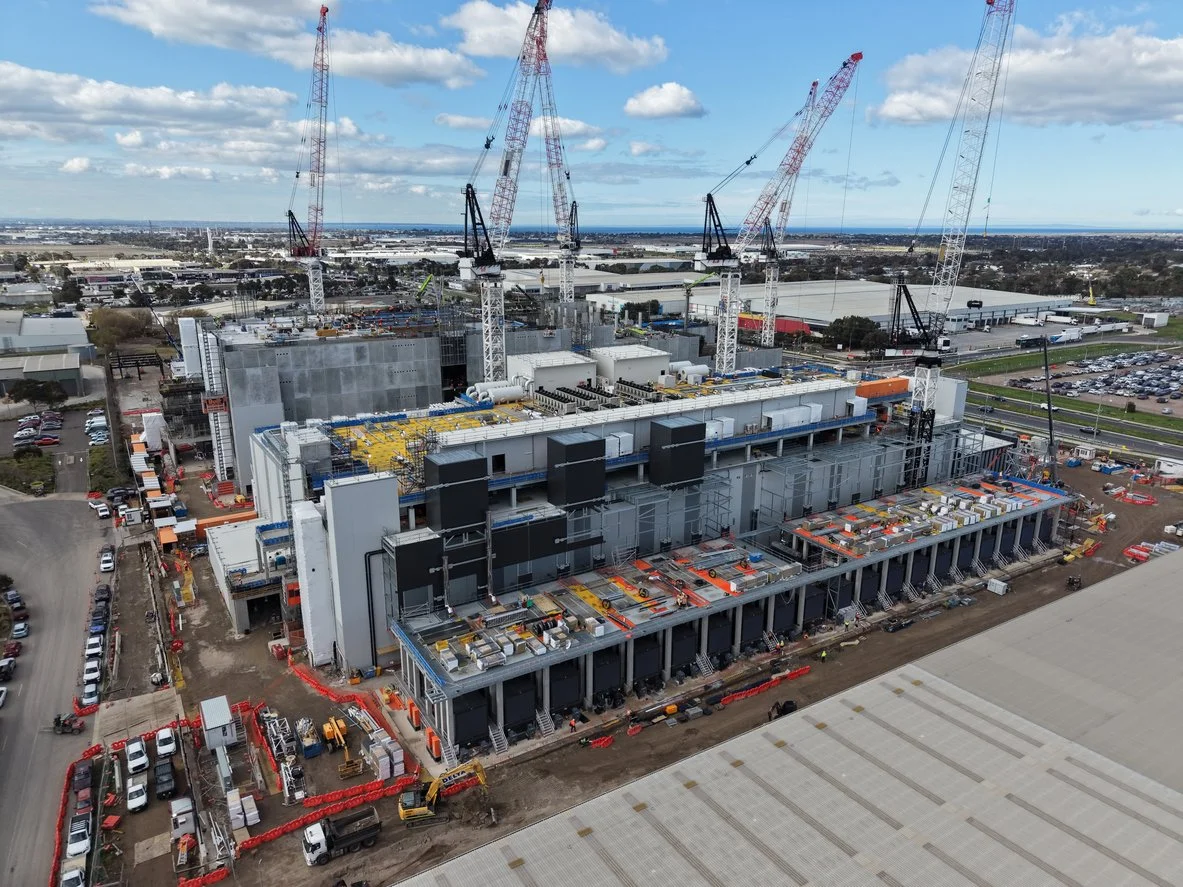
The construction of data centres, according to Westpac’s Luci Ellis, is one main factor, with high petrol prices being the problem too.
According to CBA, investment in data centres is expected to reach around $150 billion by 2030. They use the same electricians and concreters that new homes need, which pushes up building costs to exacerbate the inflation problem. Westpac says the boom in data centres will slow how fast inflation comes down.

The predictions from the banks
ANZ: hold at 4.85%, first cut November 2027.
Westpac: hold at 4.85% to mid-2027, cuts from August 2027. Risk of a February rise has grown.
NAB: pause after November, but no end to the cycle declared.
CBA: calls Tuesday's rise an "insurance" rise against inflation sticking.
Our take: plan for rates to stay higher, and test this scenario to ensure you’re budgeting appropriately. See the calculator tab below to plug in what a .25% increase in rates will do to your repayment.
Prices: the top end has fallen the furthest
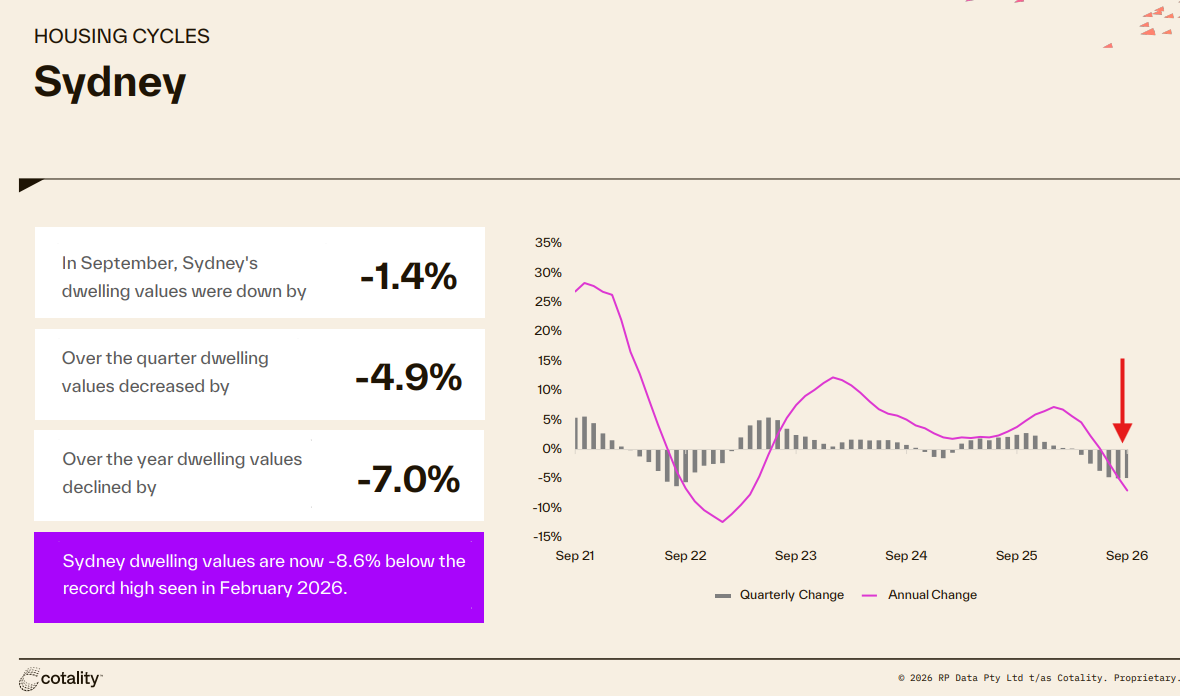
National values fell 1.1% in September, the sixth monthly fall in a row, and are 5.2% below the March peak. Sydney is 8.6% below it’s peak.
The falls aren't even. Sydney's most expensive quarter of houses is around 11% below peak, and that is according to data from September. It’s likely to be more now and in fact, real estate agents from these more affluent areas have confirmed that in some streets prices are even lower than this general trend.
The most affordable quarter is down about half that.
Buyers are in a position of power and have time to be patient. Fewer than half of auctions are clearing, with clearance rates sitting at about 50%, according to Cotality
Westpac sees Sydney down 12% this year. ANZ sees 14.1% across 2026 and 2027, with a recovery from August 2027.

How to action an upsize in this market
In our August 2026 update, we showed you how upsizers can benefit from these conditions. See how here.
Below is your practical guidance on how you can upsize your home:
Price your home honestly & conservatively: To understand what your current home is worth, use at least 3-4 comparable sales from the last two or three months, not last year's. Ask us for a Cotality Property Profile Report. Ask your real estate agent to confirm these numbers. Be conservative.
Work out your equity: Sale price, minus your loan, minus agent, marketing and legal costs.
Get your borrowing power checked: After Tuesday, it will likely change. We’ve already been sensitising calculations for clients who are looking to execute this strategy in the next few months, by factoring in these rate increases and it’s a prudent exercise to do anyway when future planning.
Set your numbers: The lowest price you'll sell for, and the highest price you'll pay. Decide them early on.
Pick your order: Sell first and you know your equity. Buy first, and you secure the home, using a delayed or extended settlement, or a bridging loan. You can also try to achieve a simultaneous settlement (where both sale and purchase settle at the same time), but this is tricky to negotiate. It is definitely the preferred approach, though, from a cost perspective and one we’ve had a lot of success with. Some lenders give you up to 12 months to sell with bridging, and you need to consider the fact that bridging costs more if your home takes longer to sell. Lender rules vary a lot here.
Negotiate & be patient: It's a buyer's market. Ask for a longer settlement, or one timed to your sale. No need to rush into things.
Keep a healthy buffer: Allow for a few months of holding costs and at least one more rate rise, and also for the unforeseen.
The best thing to do first is to have an initial chat with us. We'll then complete an assessment for you, run the numbers, and put in place a practical strategy before you fall in love with a house.
Final thoughts
The cost of building, fuel and everyday essentials is staying high, and that's why most economists expect another rate rise this week. Property prices are already down, and a further rise is likely to keep them there, or push them a little lower. Westpac's Luci Ellis expects this to be the last rise, with cuts starting around August next year. If that plays out, the market may be closer to the bottom than it feels, and the window for buying the dip may be narrowing.
Forecasts can be wrong, though. Whatever happens on Tuesday, you need to be comfortable with today's rates and repayments, and plan for the chance they stay higher for longer. Run the numbers, be realistic, and leave yourself room in this environment is the best way to approach it all.
The right strategy depends on you: your goals, income, cash buffer, time frame, property and appetite for risk. Only act on what is genuinely in your best interest, and what lets you sleep well at night.
If you'd like to talk through buying in a softer market, review your loan before Tuesday's decision, or simply understand what the data means for you, reach out. We'll help you build a plan that is genuinely in your best interest.
To start your finance journey
hit the ‘start today’ button below.
We can’t wait to help you with your loan.
-
Most economists expect a rise. The Reserve Bank meets on Tuesday 3 November 2026, and CBA, Westpac, ANZ and NAB all expect the cash rate to move from 4.60% to 4.85%. That would be the fifth rise this year and the highest cash rate since 2008.
-
Inflation rose in the September quarter. Construction costs are rising, because of the magnitude of data centres that are being built. This level of construction is competing with housing for the same trades and materials.
-
It can be, because top-end homes have fallen further than entry-level homes. You sell for less, yes, in this environment but you pay less for the property you’re purchasing as well. Because the saving on the purchase is large than the loss on the sale, this approach means that you’re in front from a numbers perspective. You still need to be able to afford the repayments though and the strategy needs to be truly in your best interest.
-
Not soon as of today (31 October 2026), according to the major banks. Westpac expects the cash rate to hold at 4.85% until mid-2027, with the first cut around August 2027. ANZ expects the first cut in November 2027. Borrowers should plan for rates to stay around current levels for at least a year.