

What's changed for buyers and borrowers after 5 rate rises.
Author: Peter Vassilis
Reading time: ~5 minutes
It’s been a tough month, and we know many of you are feeling it. Inflation is still above target. Unemployment is rising. Consumer and business confidence readings are low, and property prices are falling at a rapid pace. We're asked every day how to navigate this and what to expect next year. More economists now forecast two rate cuts in 2027. Here is what to check, and what the latest research tells us about the months ahead. We unpack what this means if you have a mortgage or if you're thinking about buying. A big thank you also to you, our supporters, clients, and people who trust us. Thanks for helping us reach 500 Google reviews.
Key takeaways
Following a weak jobs report in October, more economists believe the November rate hike was the last, and a growing number forecast two cuts in 2027.
In our illustrative example below, borrowing power is down about 10%, from roughly $1.45 million to $1.3 million. Tapping into equity can also be harder when values soften.
Forecasters expect prices to ease until around mid-2027, then recover. Domain has Sydney house prices up about 3% across 2027, and ANZ expects Sydney and Melbourne to lead the rebound.
If things are tight, talk to us early. There are more options before you fall behind than after.
Borrowing power and property values have both fallen
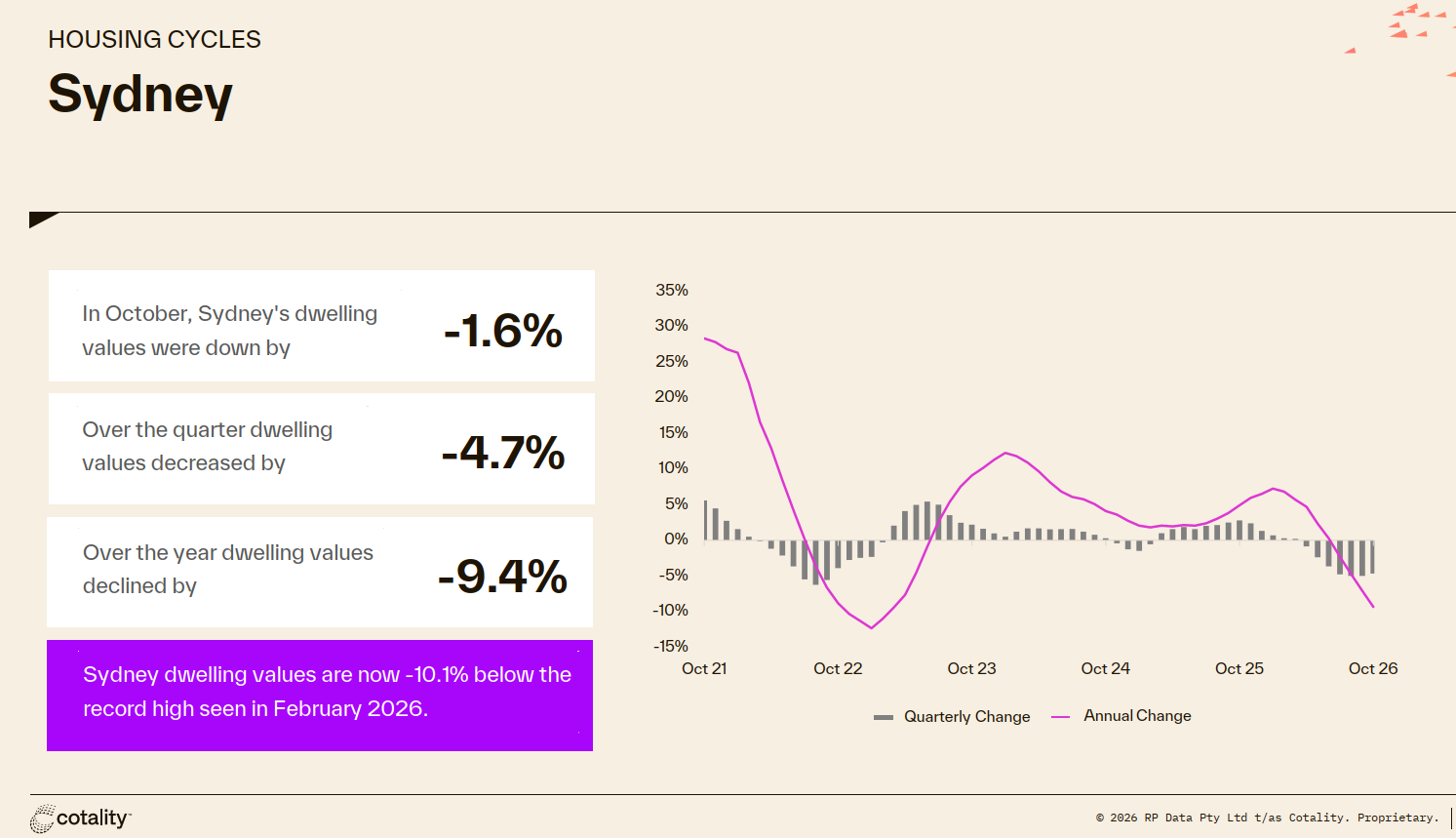
The Reserve Bank of Australia (RBA) increased the cash rate again, the fifth time this year, taking the cash rate to 4.85% this November, just as we highlighted was likely in our October update.
Cotality data shows dwelling values have fallen in most capital cities, with Sydney sitting furthest below its peak among the capitals at 10.1% down from February through the end of October.
What stands out is how closely the fall in borrowing power matches the fall in prices.
In the example below, we can see how closely the drop in borrowing power mirrors the fall in dwelling values. The reduction in borrowing power is roughly the same percentage as Sydney’s decline. That helps explain why buyers relying heavily on a loan may see lower asking prices without necessarily gaining more purchasing power. Higher interest rates reduce what borrowers can offer, putting downward pressure on prices alongside employment, housing supply, and buyer sentiment.
This example shows the impacts of five rate rises on a households earning $250,000 combined, making principal and interest repayments on an owner-occupied loan, with moderate to low living expenses, and no commitments like credit cards or personal loans.
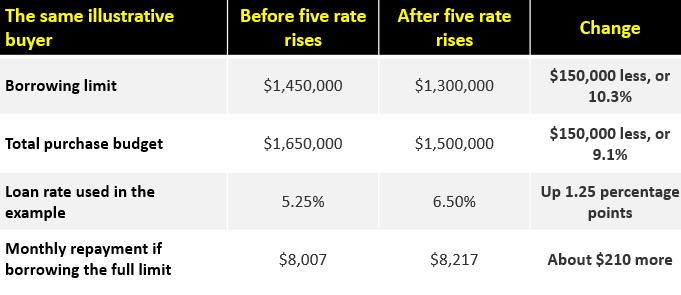
Your result will depend on your deposit, the property you are buying and the loan available to you but you can see the point. Economists often describe Sydney as one of the more rate-sensitive markets. The pattern in this example is consistent with that.
If you are selling to fund a purchase, update your likely sale proceeds too with as many comparable sales as you possibly can find. Looking at an upsize in this market, as we explored in last month’s update, it can make sense for some houesholds, provided the strategy fits your numbers.
So, has buying become easier?
In some ways, yes. Buyers have more time and more room to negotiate. Cotality's November chart pack shows vendor discounting at 4.5%, homes taking a median of 41 days to sell nationally, and the auction clearance rate at its lowest since May 2020.
In other ways, no. Borrowing power has fallen by about as much as prices, repayments are higher, and lenders are valuing cautiously. The better question is whether the purchase still works at today's rates, with a buffer.
Your existing mortgage and what you can do
As the example highlights, the rise in repayments is substantial. If you are topping up repayments from savings, check how much your cash buffer is shrinking each month and how long it can comfortably bridge the gap. If your income has shifted, run your loan review using what is coming in today and if you want extra headroom, test a further 0.25 percentage point increase in the calculator below.
Lower property values can also affect refinancing or accessing equity for shares, renovations, buying a business, or a car loan top-up. When values dip, your loan makes up a larger share of the property’s value (a higher loan-to-valuation ratio, or LVR), which can influence the rates, products, or terms available when switching lenders.
In today's market, staying put can sometimes make more sense if your equity position has tightened. If you can comfortably service the debt and have enough equity, opportunities still exist. The question is whether the extra risk suits you, which is harder to judge when confidence is low, as below.
What NAB and ANZ are seeing
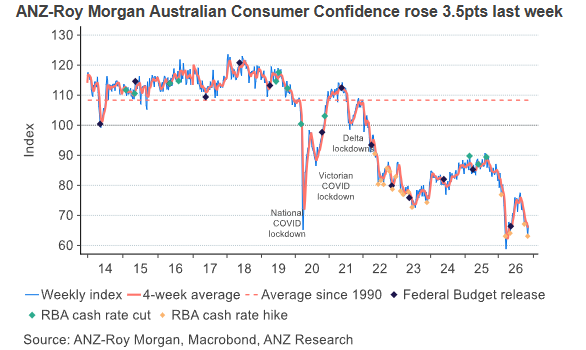
ANZ-Roy Morgan’s latest consumer confidence reading improved to 66.6, but mortgage holders remained the least confident housing group. You can see how low consumers’ confidence is at the moment, down near Covid lockdown figures.
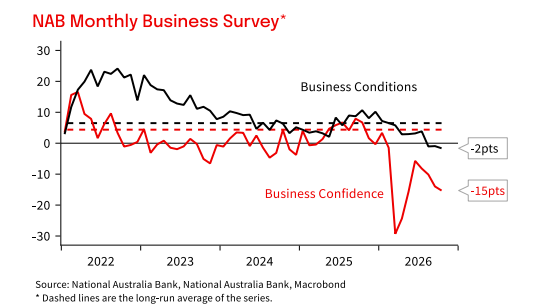
NAB’s October business survey recorded confidence at minus 15, while its measure of orders for future work fell to minus 12. These are index readings, not percentages.
For someone running a business or earning variable income, the practical question is whether current earnings can cover the repayments and the bills coming due. A loan review should reflect those numbers, including any recent change in trading.
What could change in 2027
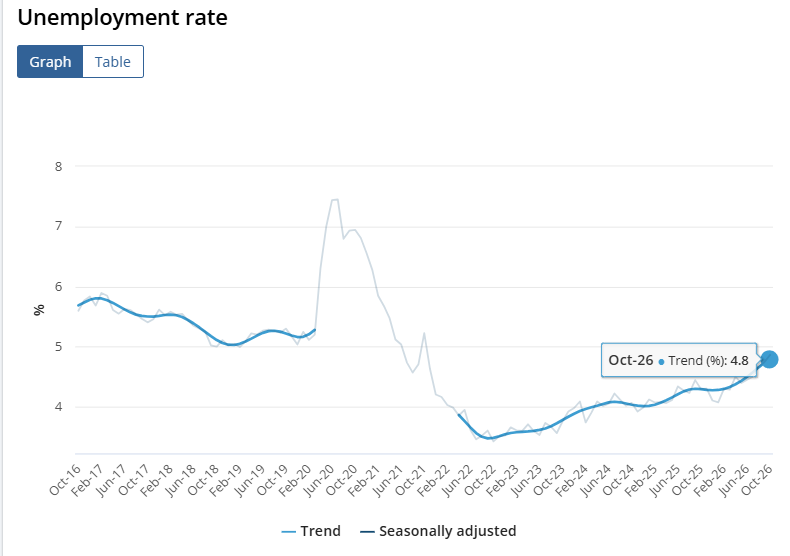
Annual inflation was 4.3% in September, while unemployment reached 4.9% in October. The RBA is weighing persistent inflation against a weakening economy.
NAB expects rates to hold at 4.85% until August 2027 and then begin to come down, as the labour market cools and growth comes in a little softer than the RBA expects. Its economists say they think the RBA is done hiking. This forecast aligns with last month’s note from Westpac’s Luci Ellis who still expects cuts from August 2027, and a further rise would, in her words, need a material new inflation shock.
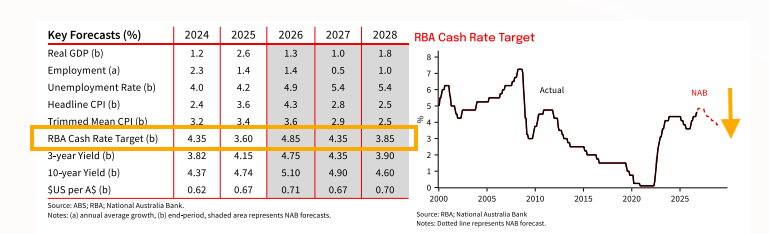
CBA sees the first cut from August 2027, while Domain assumes the December quarter.
Domain forecasts further house-price falls through the first half of 2027, followed by a recovery. Its central forecast has Sydney house prices ending December 2027 around 3% above December 2026, assuming the cash rate has peaked and the first cut arrives in the final quarter of 2027.
We are cautious, though. In June, several banks were already pencilling in cuts for 2027, and the RBA then raised rates twice more. Domain also notes that if inflation proves stickier and the RBA raises rates again, prices would track toward the lower end of its forecast ranges.
Dates to watch: October inflation figures on Wednesday 25 November, and the RBA's next decision on 8 December.
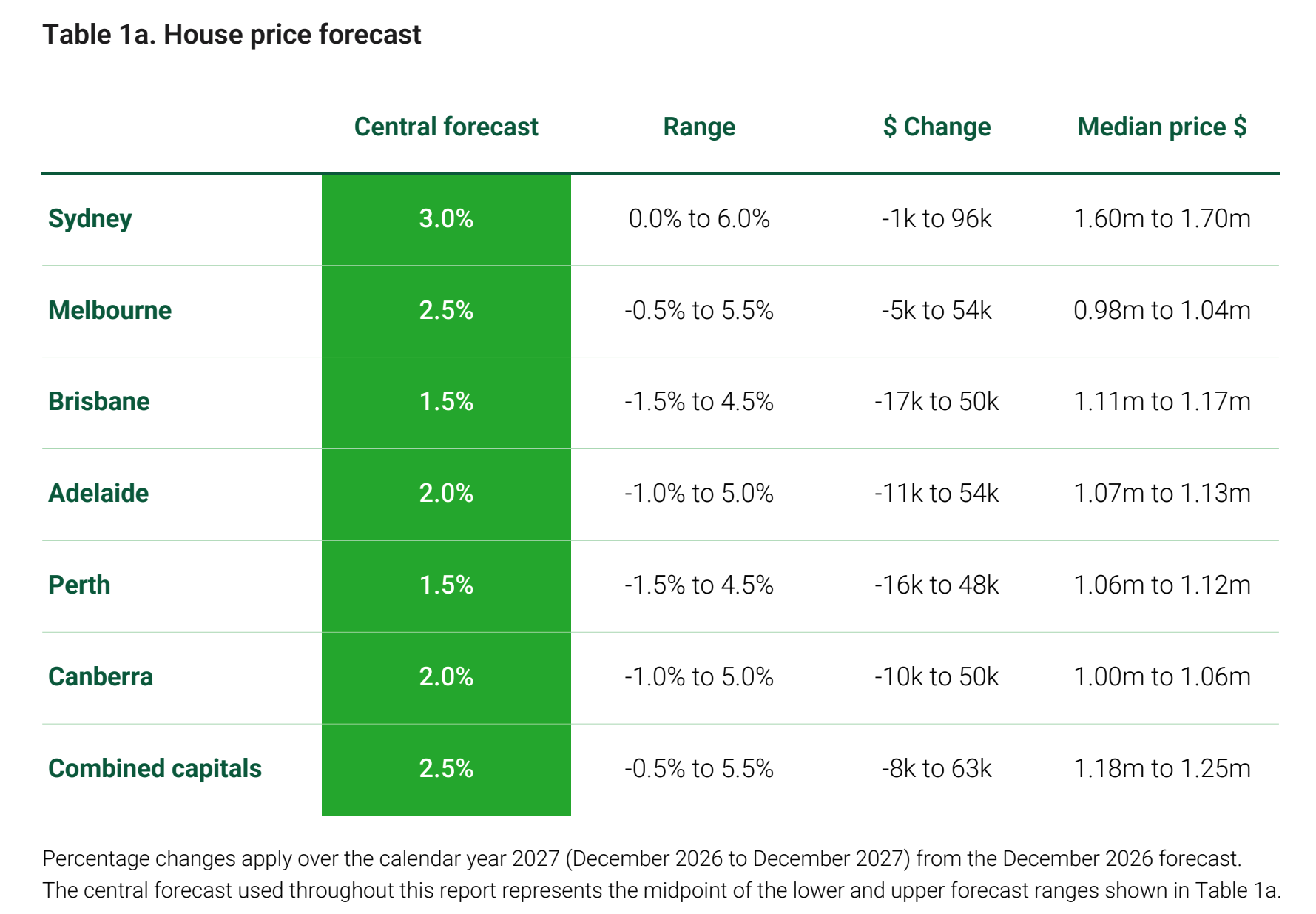
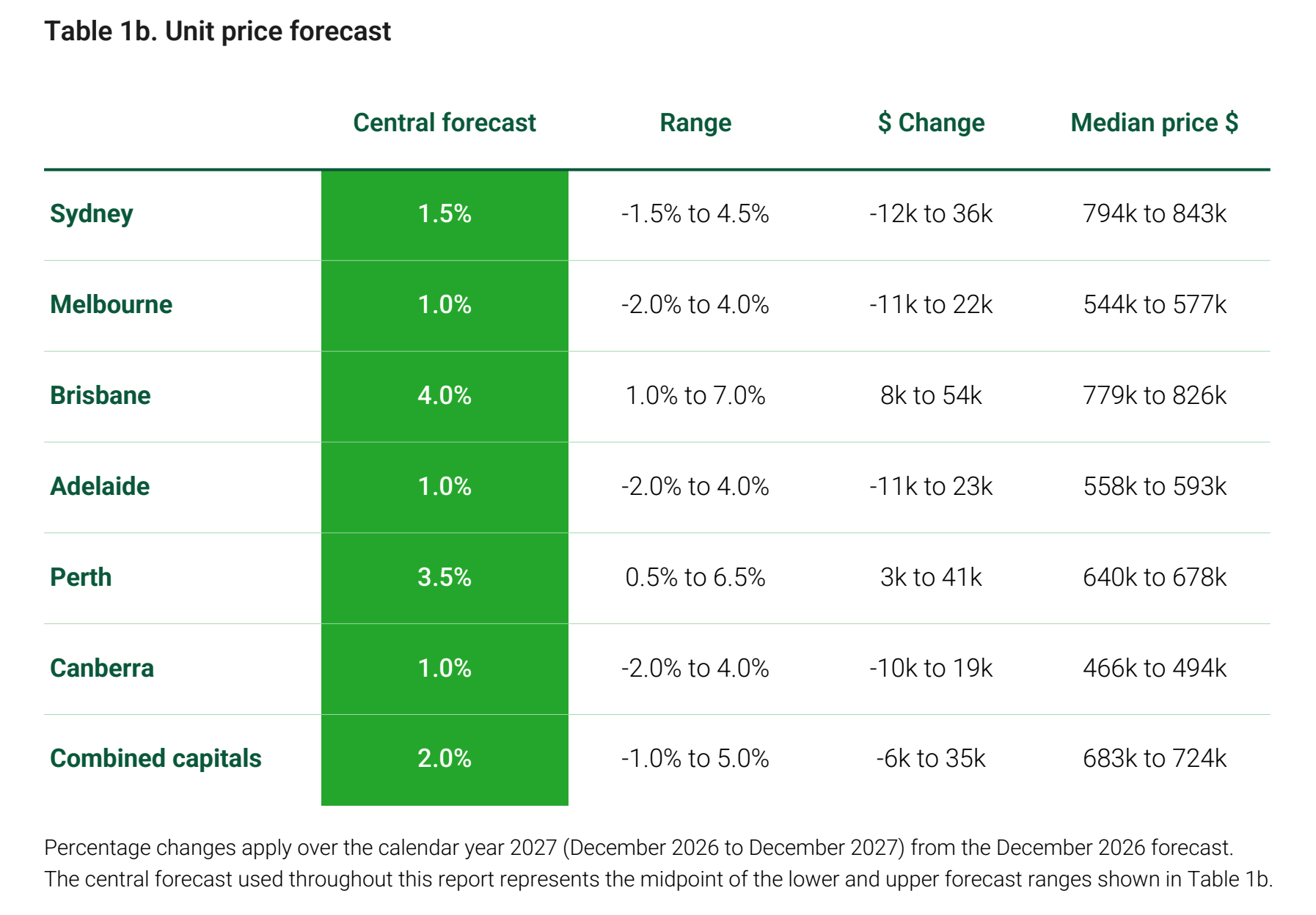
Those forecasts offer context for a longer-term plan. They are useful as guidance only.
They cannot establish what a particular home will sell for or when your repayment will fall. A purchase should work at the loan terms available to you, without depending on a forecast rate cut to make the repayments manageable. The right plan is one you feel comfortable with.
If your next repayment is becoming difficult
Please talk to us, and we can help you with a strategy. The earlier you ask for help or let us know of what may be changing in the future, the more options you will have. Every lender has a hardship team, and when you ask, your lender must consider your request. That can mean changed loan terms or a temporary pause or reduction in repayments.
We can review your loan, work out what you can afford and help you prepare accordingly.
Thank you for 500 Google reviews + our conference this week

This month we reached 500 Google reviews, after ten years of looking after people. Thank you to everyone who took the time to share their experience.
Buying a home, refinancing, investing or arranging business finance takes a lot of trust, and we're grateful for yours, and for every referral.
Thank you to our team too, for the care behind each of those reviews. We'll build on it at our annual team conference this week. Read our Google reviews.
Final thoughts
Prices are lower, but borrowing power has fallen by about the same, so buying is cheaper, not necessarily easier. Your next decision depends on what you can borrow, what cash you can contribute, and what the repayment leaves you to live on.
Have those figures checked before changing your price range, committing to a purchase or using equity. If you already have a loan, a review should show if you are truly on the best terms with that lender. A review could also let you work out what a change would save after costs and what it would mean over the remaining term. We do reviews every six months for our clients.
We said it last month, and we’ll say it again. The right strategy depends on you. Your goals, income, cash buffer, time frame, property and appetite for risk. Only act on what makes you feel comfortable and what lets you sleep well at night.
If you'd like to talk through buying in a softer market, or would like to review your loan, or simply understand what the data means for you, reach out. We'll help you build a plan that is genuinely in your best interest.
To start your finance journey
hit the ‘start today’ button below.
We’re here when you’re ready.
Quick answers
-
Partly. Buyers have more time and more room to negotiate. Cotality's November chart pack shows vendor discounting at 4.5% and homes taking a median of 41 days to sell nationally. But borrowing power has fallen by roughly the same percentage as Sydney prices, and repayments are higher after five rate rises. A purchase should work at today's rates, with a buffer, so get your borrowing power checked before you change your price range.
-
In our example, a household earning $250,000 could borrow about $1.45 million before the five rises and about $1.3 million after, a fall of roughly 10%. That is close to Sydney's 10.1% fall in dwelling values. Your result depends on your income, deposit, expenses and lender, so treat it as an illustration and ask us for your own figure.
-
Many economists now think the RBA has finished raising rates and expect cuts in 2027. NAB expects the first cut in August 2027, while Domain assumes the first cut in the December quarter. Forecasts can change, especially with inflation at 4.3%, so plan around today's rates and don't rely on a cut to make your repayments manageable.
-
Probably not yet. Domain expects house prices to keep falling through the first half of 2027 before stabilising, with capital city houses down 10 to 13% from peak to trough. ANZ expects Sydney and Melbourne to lead the recovery. Nobody can call the exact bottom, so focus on what you can control: your cash buffer, your borrowing power and your timing.
-
Waiting has its own costs and risks, and nobody can time the market. A better test is whether you can comfortably afford the repayments at today's rate, and at 0.25 of a percentage point higher, without relying on a future cut. If you can, a softer market can give you time and room to negotiate. If you can't, it may be worth adjusting your price range or waiting.
-
It depends on your equity and servicing position. When values fall, your loan becomes a bigger share of your home's value (a higher loan-to-valuation ratio, or LVR), which can limit the lenders, rates and products available if you switch. Staying put can make sense if your equity has tightened. Switching can still pay off if you have enough equity and the savings outweigh the costs, so ask for a loan review that shows the saving after costs.
-
Act early. Contact your mortgage broker or your lender's hardship team as soon as you think you will have trouble, including after a missed payment, because the earlier you ask, the more options you have. Your mortgage broker can workshop and implement a strategy for you. Your lender must consider your request, and may change your loan terms or temporarily pause or reduce repayments. We can review your loan and help you prepare.
General information only. This doesn't take your personal objectives, financial situation or needs into account. Please speak with us before making any financial decisions. Credit Representative 494872, Australian Credit Licence 389328.